Last updated October 2026
Eating out with a dietary need used to mean asking for the one salad without croutons. Most cafes now mark gluten free, dairy free and vegan dishes on the menu, and plenty of cabinets carry labelled options too. That makes it easier, but the labels do not all mean the same thing, and the cabinet in particular is where things get blurry.
★View the Best Cafes in Whanganui→Whether you avoid gluten because of coeliac disease, cut out dairy, or eat plant based by choice, here is how to read a Whanganui cafe menu, what a cafe has to tell you, and what is worth asking before you order.
What the labels on a menu usually mean
Menu codes are a shortcut, and different cafes use them slightly differently. As a rough guide:
GF
- What it usually means
- Made without gluten-containing ingredients
- Worth checking
- Whether it is prepared separately, if you have coeliac disease
GFO
- What it usually means
- Can be made gluten free on request, often by swapping the bread
- Worth checking
- Whether the swap changes anything else on the plate
DF
- What it usually means
- Made without dairy
- Worth checking
- Butter, cream and cheese in sauces and toppings
V
- What it usually means
- Vegetarian, so no meat or fish
- Worth checking
- Eggs, cheese and honey, which vegetarian dishes often include
VG
- What it usually means
- Vegan, so no animal products at all
- Worth checking
- Dressings, glazes and anything cooked in butter
The difference between “gluten free” and “can be made gluten free” matters more than it looks. A dish designed without gluten is one thing. A dish where the bread is swapped for a gluten free version may still be cooked on the same grill and plated beside everything else.
What a cafe has to tell you
You do not have to rely on the menu alone. The Ministry for Primary Industries’ guidance on checking food allergens when dining out is clear on a few points:
- When you ask, a restaurant or cafe must be able to tell you about the allergens in its food.
- Some businesses choose to list allergens on menus and cabinet signage, but if there is no information you can ask staff, and they can tell you verbally or in writing.
- If a business describes food as “gluten free” or “dairy free”, it must manage those allergens in a way that keeps the food safe for you.
MPI also suggests asking how a kitchen minimises the risk of cross-contact, and not ordering something if you are unsure it is safe. Asking is not being fussy. It is the normal way to get a meal you can actually eat.
Cabinet food is where it gets tricky
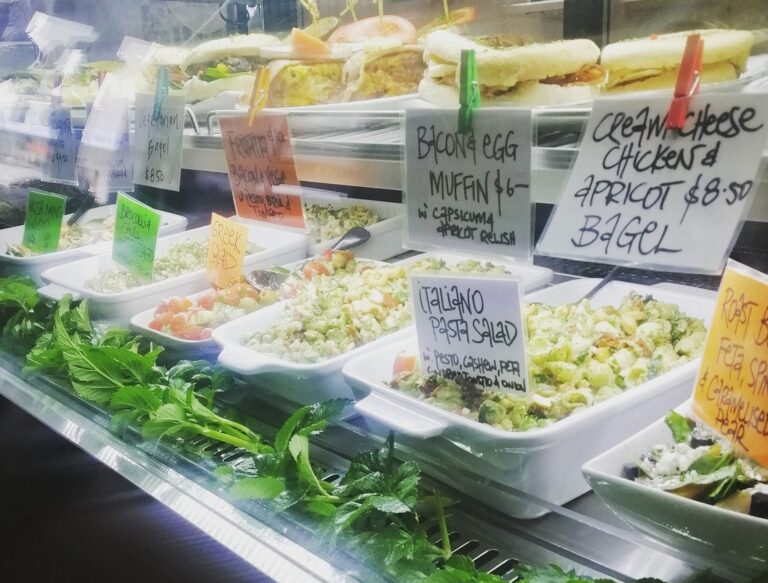
Cooked-to-order dishes are usually the easiest to get right, because the kitchen makes your plate on its own. Cabinet food is different. It is made in batches earlier in the day, displayed side by side, and served quickly when the counter is busy.
Things to look for
- Labels on the tickets. Many cabinets mark gluten free, dairy free or vegan items on the price ticket. If an item has no label, assume nothing and ask.
- How it sits in the cabinet. A gluten free slice resting against an ordinary one, or sharing a tray, may not suit someone with coeliac disease.
- How it is served. Shared tongs and a shared toaster are common in busy cafes. If that matters to you, ask whether your item can be served or heated separately.
None of this means cabinet food is off the table. It just means the questions matter more there than they do for a dish made to order.
Questions worth asking at the counter
A short, specific question gets a better answer than “is this gluten free?”:
- Is this made without gluten, or is it a gluten free version of a standard dish?
- Is it cooked or toasted separately from the regular food?
- Which items in the cabinet are labelled, and is the label for the whole item or just the base?
- Is there butter, cream or cheese in the sauce or dressing?
- Can this be made vegan, and what changes if it is?
If the answer is hesitant, it is fine to choose something else. The best outcome is a meal you are confident about, not a guess.
Ordering ahead makes it easier
If you have more than one dietary need, ordering online ahead of time can help. Most online ordering systems have a notes field, which gives you room to explain what you need without holding up a queue, and gives the kitchen time to read it properly. It is also a good way to see the full menu, with its labels, before you arrive.
Where Mischief Cafe fits
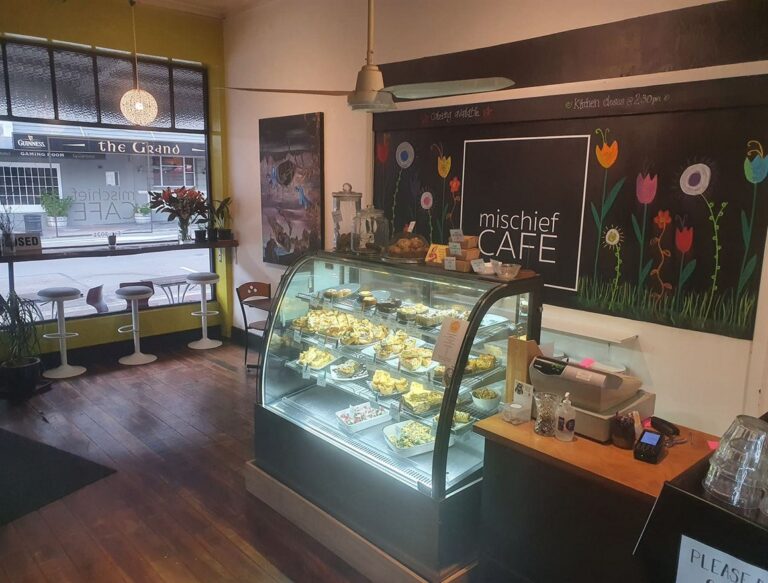
Mischief Cafe on Guyton Street marks vegan, gluten free and dairy free items on its breakfast and lunch menu. Examples on the current menu include a Vege Stack marked vegan, a White Choc and Raspberry Brownie marked gluten free, an Orange and Almond Cake marked gluten free and dairy free, and a Spirulina smoothie marked vegan and dairy free. The menu notes that the Tropical Green smoothie can be made dairy free and vegan by leaving out the yoghurt.
The cafe takes orders online for pick-up, and asks customers who want to dine in to say so in the order notes, which is also a useful place to explain a dietary need. If you have coeliac disease or a serious allergy, ask the team how an item is prepared before you order, as you would anywhere.
Mischief Cafe is open Monday to Friday, 7.30am to 2.30pm, at 96 Guyton Street. Call 06 347 1227 or visit mischiefcafe.nz.